weorex packing

Best Takeaway Containers

Best Takeaway Containers for Food Delivery & Cloud Kitchens

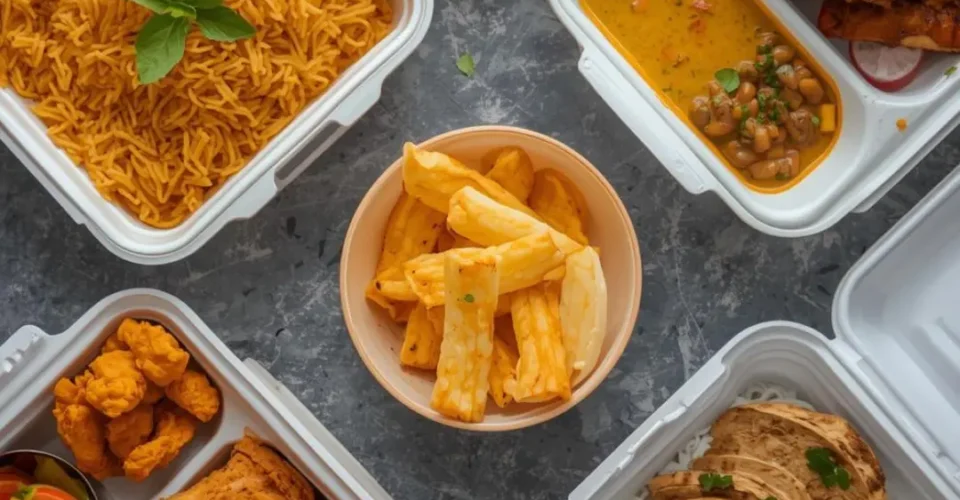
Packaging Guide 2026 Best Takeaway Containers for Food Delivery & Cloud Kitchens The complete buyer’s guide to choosing packaging that keeps food fresh, impresses customers, and grows your delivery business. 📅 March 2026 ⏱ 12 min read 🏷 Packaging · Cloud Kitchen · Food Delivery Picture this: It’s 8:30 on a Friday evening. A customer opens their delivery bag after a long week, excited for the butter chicken they ordered. But the container has leaked. The rice is soggy. The naan is stuck to the lid. They don’t order again. They leave a two-star review. That single container cost you not just one order — it cost you a loyal customer. In the world of food delivery and cloud kitchens, packaging is not an afterthought. It is your product. 78%Customers judge food quality by its packaging 2.3xMore repeat orders when packaging impresses ₹40Cr+Lost yearly due to poor packaging in cloud kitchens 62%Customers share good packaging on social media High-quality takeaway containers that keep food fresh from kitchen to doorstep. Why It Matters The Real Cost of Bad Packaging Walk into any thriving cloud kitchen and you will find one consistent pattern: the best-reviewed ones obsess over packaging just as much as they obsess over their recipes. In an era where customers never see your kitchen, never interact with your staff, and judge everything by what arrives at their door — the container is the chef’s handshake. Bad takeaway packaging creates a chain reaction. Food loses heat unevenly. Sauces leak into dry items. Crispy textures turn limp. Even a perfectly cooked dish becomes a disappointment. And in today’s world, that disappointment goes straight to Zomato, Swiggy, or Google Reviews — publicly, permanently. The good news? Choosing the right containers is not complicated once you understand the core requirements. This guide breaks everything down — materials, types, use cases, comparisons, and smart buying tips — so you can make the right decision for your kitchen. 🌡️ Heat Retention The right container keeps food at serving temperature for 30–60 minutes in transit. 🔒 Leak-Proof Sealing Prevents sauces, gravies, and liquids from spoiling other items in the bag. ♻️ Eco-Friendly Sustainable packaging builds brand trust and meets growing customer expectations. 🎨 Brand Impression Branded packaging turns every single order into a powerful marketing moment. Types & Materials A Complete Guide to Takeaway Container Types Not every dish needs the same packaging. Biryani behaves very differently from a Caesar salad. A pizza needs ventilation; a curry needs a hermetic seal. Understanding your food type is step one in choosing the right container material. From kraft paper boxes to premium PP containers — each material has its ideal use case. 1. Kraft Paper & Cardboard Containers The workhorse of the industry. Kraft paper boxes are lightweight, biodegradable, and easily customisable with branding. They work wonderfully for dry or semi-dry foods — sandwiches, wraps, momos, snack boxes, and desserts. However, they struggle with highly liquid items unless coated with a food-grade PE lining inside. Best for: Burgers, wraps, snacks, baked goods, dry items, dessert boxes. 2. PP (Polypropylene) Plastic Containers The undisputed champion for curries, gravies, and rice dishes. PP containers are BPA-free, microwave-safe, and form an airtight seal when paired with a snap-lock lid. They are transparent (great for visual appeal), durable, and stack-friendly for storage. Most professional cloud kitchens in India rely heavily on PP containers for good reason. Best for: Gravies, dal, rice, noodles, soups — anything with significant moisture or sauce content. 3. Aluminium Foil Containers Exceptional heat conductors and ideal for keeping food warm over extended delivery windows. Aluminium containers are oven-safe, making them perfect for biryani and baked dishes. They convey a sense of quality and warmth that customers notice. The limitation: they are not microwave-safe, so always include printed reheating instructions. Best for: Biryani, baked dishes, meals with long delivery windows, premium restaurant deliveries. 4. Bagasse (Sugarcane Pulp) Containers The sustainable star of 2026. Made from sugarcane fibre, bagasse containers are 100% compostable, water and oil resistant, and microwave-safe. They have excellent rigidity, making them suitable for thali-style full meals. While slightly more expensive than plastic per unit, they signal a clear eco-commitment that resonates strongly with today’s conscious consumer. Best for: Eco-conscious brands, thali meals, meal kits, health food delivery. 5. Clamshell & Burger Boxes Hinged containers designed for burgers, sandwiches, parathas, and other hand-held items. The hinged lid stays attached so there is no separate lid to lose. Vented designs prevent sogginess by allowing steam to escape — a small detail that makes a huge difference to texture on arrival. Best for: Burgers, hot sandwiches, parathas, quesadillas, wraps. Left: Sustainable bagasse containers. Right: Branded packaging that tells your story at the doorstep. Side-by-Side Comparison Takeaway Container Comparison Table Use this at-a-glance table to match your dish type with the best container material. We have evaluated each across the six most critical delivery performance factors. Container Type Heat Retention Leak-Proof Eco-Friendly Microwave Safe Cost Best Use Kraft Paper Box ★★★☆☆ Moderate ✓ Yes ✗ No Low Dry foods, snacks PP Plastic Container ⭐ ★★★★☆ Excellent Recyclable ✓ Yes Low–Mid Gravies, rice, curries Aluminium Foil Tray ★★★★★ Good Recyclable ✗ No Mid Biryani, baked dishes Bagasse Container ★★★★☆ Good ✓ Compostable ✓ Yes Mid–High Thali, health food Clamshell Box ★★★☆☆ Moderate Paper: Yes ✗ No Low Burgers, parathas PET Clear Container ★★☆☆☆ Excellent Recyclable ✗ No Low–Mid Salads, cold items ⭐ Editor’s Pick for most cloud kitchens — best balance of performance, cost and availability. 🧠 Pro Tip: The 3-Container System Most successful cloud kitchens do not rely on a single container type. They use a three-layer system that handles every dish perfectly: PP containers for all gravies, curries, and wet items Kraft or bagasse boxes for dry items, breads, and sides A branded outer delivery bag that unifies the entire experience This approach prevents cross-contamination, maintains each item’s individual integrity, and creates a premium unboxing experience — even for an ₹199 meal. For Cloud Kitchens What Cloud Kitchens

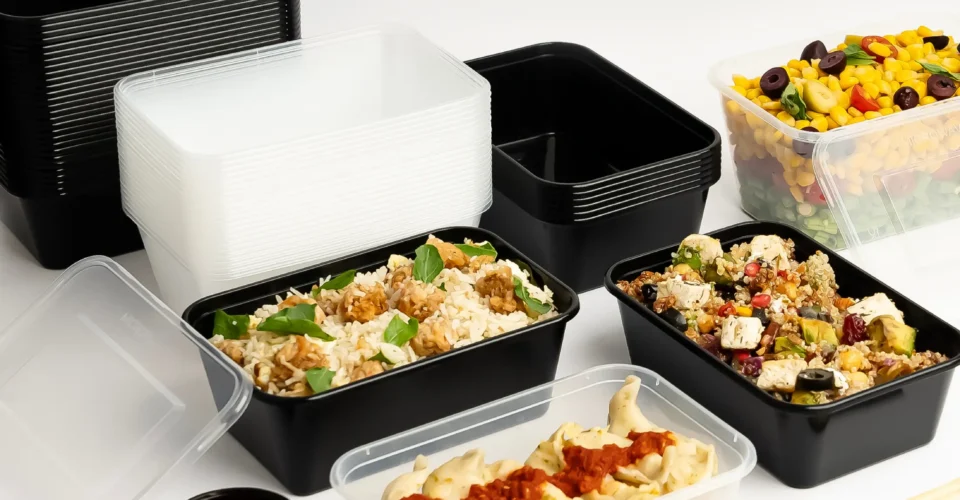
Rectangular 1000 ml plastic food containers with Lid

Round vs Rectangular PP Food Containers: Which Sells Better in Export Markets?

Round vs Rectangular PP Food container: Which Sells Better in Export Markets? In the global food packaging industry, container selection is no longer a minor operational detail. For international buyers, distributors, and food-service brands, choosing the right PP food container directly impacts logistics efficiency, food safety, shelf life, and cost management. As export volumes increase and supply chains become more structured, buyers are paying closer attention to packaging shape, stacking behavior, and real-world performance during transportation. One of the most common questions raised in export discussions is whether round or rectangular PP food containers perform better across international markets. Contact Us Why PP Food Container Are Widely Used in Export Markets A PP food container is produced using polypropylene, a food-grade thermoplastic known for durability, chemical resistance, and thermal stability. These properties make PP containers suitable for long-distance shipping where packaging is exposed to repeated handling, stacking pressure, and temperature variation. International food supply chains rely heavily on PP containers for frozen foods, ready-to-eat meals, and takeaway container formats because the material maintains structural integrity while remaining lightweight. This balance helps exporters reduce freight weight while maintaining packaging reliability. Why Container Shape Matters More in Export Logistics In export operations, packaging shape plays a critical role in carton design, pallet loading, and shipping container utilization. Even a small improvement in space efficiency can significantly reduce per-unit shipping cost over high-volume exports. For this reason, importers evaluate round and rectangular PP food containers based on operational compatibility rather than visual appeal. Round PP Food Container in International Markets Round PP food container commonly used for gravies, soups, and food-service exports Round PP food container are widely used in markets where liquid and semi-liquid foods form a major part of consumption. These include curries, soups, sauces, and prepared meals with high moisture content. From an export perspective, the circular shape helps distribute internal pressure evenly during transportation. This supports lid sealing stability and reduces deformation risk when containers are stacked for long periods. Rectangular PP Food Container in Export Supply Chains Rectangular PP food container designed for space-efficient export logistics Rectangular PP food container are commonly used in structured food systems such as frozen meals, rice-based dishes, and portion-controlled takeaway container packaging. Their straight edges allow better alignment inside cartons and pallets, which improves space utilization and simplifies warehouse organization for importers handling large inventories. Export Market Comparison Evaluation Area Round Containers Rectangular Containers Food Application Liquid & semi-liquid meals Dry, frozen & portioned foods Logistics Efficiency Moderate High Buyer Preference Food-service operators Importers & distributors Domestic vs Export Packaging Considerations Export packaging prioritizes durability, space optimization, and long-distance handling. Domestic packaging, on the other hand, focuses on short transit cycles and local distribution efficiency. Businesses serving the Indian domestic market can explore suitable packaging options at Weorex Packing – Domestic Platform. Conclusion Both round and rectangular PP food containers play important roles in international markets. Their performance depends on food type, logistics structure, and buyer operations rather than shape preference alone. Exporters offering flexible takeaway container solutions are better positioned to meet global demand and build long-term buyer relationships. Book Now

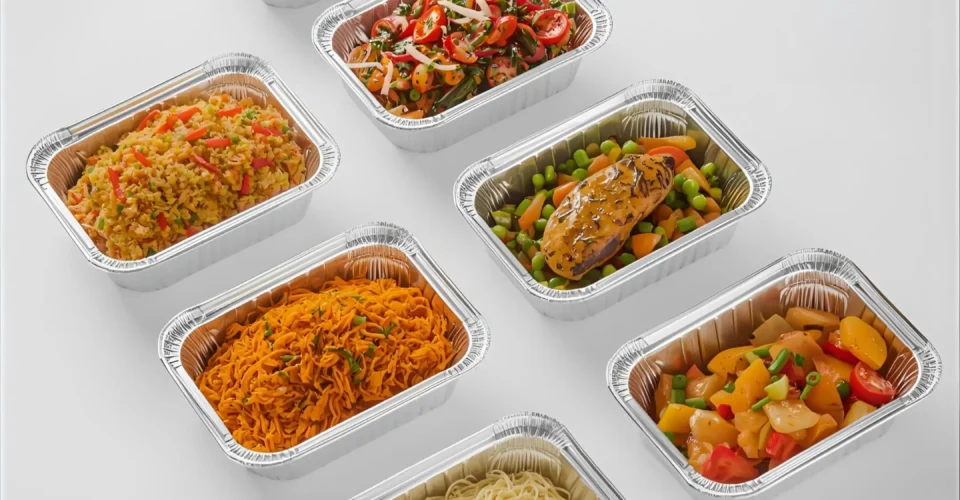
Rectangular aluminium foil food container for takeaway meals

Top 10 Types of Takeaway Food Containers Your Business Should Offer

Top 10 Takeaway Containers Your Food Business Should Offer A quality takeaway container is the first line of defense for food that must travel — it preserves temperature, prevents leaks, and enhances presentation. This guide groups your product range into ten practical takeaway container types, explains their core uses, and helps you pick the right option for each menu item. Hinged Portion Cups — the convenient takeaway container for condiments Hinged portion cups (1–6 oz) are compact, fast to pack, and specially designed to prevent lid loss in busy kitchens. Best for: condiments, tasting portions, small desserts. Why choose them: reduce packing time and deliver reliable single-serve portions. Sauce Cups with Separate Lids — the precise takeaway container for dressings Available in 2 oz and 4 oz with transparent, black, or white lids to suit brand styling and hygiene needs. Best for: dips, dressings, chili oil, gravies. Why choose them: secure lids prevent leaks and support consistent portion control. Round Tall Containers — the space-saving takeaway container for layered foods Tall cylinders (8 oz up to 34 oz) are ideal for layered desserts, parfaits, and liquid-rich sides that need vertical space. Best for: parfaits, fruit mixes, soups, layered salads. Why choose them: maximize volume while keeping a compact footprint in delivery bags. FLAT Series Round Containers — the premium takeaway container for presentation FLAT bowls (600–1000 ml) combine an elevated look with stackability, perfect for premium healthy bowls and meal-prep menus. Best for: gourmet salads, noodles, healthy bowls. Why choose them: superior plating aesthetics and reduced movement of toppings. Deep Round Bowls — the dependable takeaway container for hot, liquid dishes Deep bowls and RNB series options handle large portions and liquids safely while maintaining structural rigidity during transit. Best for: ramen, stir-fries, poke bowls, soups. Why choose them: prevent spills and protect sauce structure for a better customer experience. Rectangular Containers — the versatile takeaway container for meal prep Rectangular shapes (500–1500 ml) are the go-to choice for meal-prep providers and combo meals where packing efficiency matters. Best for: meal prep, curry + rice combos, grilled items. Why choose them: stackable, space-efficient, and available in heavy-duty versions for larger mains. Dome-Lid Containers — the protective takeaway container for topped dishes Dome lids give extra vertical space for garnishes and protect delicate toppings during transport and display. Best for: salads, desserts, cold meals with toppers. Why choose them: protect presentation and reduce damage from compression. Specialty Containers — the brand-focused takeaway container for premium items Mango and Cherry series containers are distinctive shapes that make products stand out and support premium pricing strategies. Best for: fruit bowls, seasonal specials, premium salads. Why choose them: unique unboxing experience and stronger brand recognition. Download full product spec sheet Need a PDF catalog or optimized product pages? I can adapt this layout into WordPress product templates or printable catalogs.