The European Commission has delayed the PPWR labeling rules – the EU-wide sorting labels required by the new Packaging and Packaging Waste Regulation. The implementing act was due on 12 August 2026; it is now expected in the second quarter of 2027, after a public consultation.
For restaurant groups, distributors and brands that buy packaging for the EU market, the PPWR labeling delay gives some breathing space, but it does not change the direction. This guide explains what the labels will do, what the delay changes, and how to prepare your packaging orders without wasting money on artwork that may change.
What Changed: PPWR Labeling Rules Pushed to Q2 2027
According to Packaging Insights and letsrecycle.com, the Commission will run a public consultation before it adopts the labeling implementing act. As a result, adoption of the PPWR labeling rules has moved from August 2026 to the second quarter of 2027.
The labels themselves are not canceled. The Commission’s research service (JRC) already proposed a material-based sorting label system in January 2026; however, the final specifications are still open.
| Item | Before | Now (October 2026) |
|---|---|---|
| Labeling implementing act | Due 12 August 2026 | Expected in Q2 2027, after consultation |
| Label design basis | Material-based proposal from the Commission’s research service | Still a proposal – final specifications not adopted |
| Wider PPWR obligations | Apply under the regulation’s own timetable | Unchanged by the labeling delay |
What the PPWR Labeling Rules Will Do

Once adopted, the PPWR labeling rules will set one harmonized system across all EU countries. In practice, they aim to help consumers:
- sort packaging waste into the right bin with a material-based label;
- identify reusable packaging and packaging covered by deposit return systems;
- see recycled content and bio-based content where it applies.
Which packaging is covered?
Trade bodies such as OPRL expect the rules to reach beyond the pack on the shelf to secondary and tertiary packaging as well. In addition, businesses trading in Northern Ireland are expected to apply the PPWR labels under the Windsor Framework.
Why the Delay to the PPWR Labeling Rules Is Not a Pause
Commentators agree on one point: the PPWR labeling delay gives extra time, but it is not a relaxation of the regulation. OPRL’s managing director told Packaging News that it is still unclear whether the deadline will apply to packaging on shelf or in production, and advised members to start preparing now.
Awareness is also low outside Europe. For example, a survey by the Korea International Trade Association reported that eight in ten Korean exporters were unaware of the EU packaging regulation. Buyers who prepare early will therefore have fewer surprises with their suppliers.
How to Prepare Packaging Orders for the PPWR Labeling Rules
You do not need to redesign artwork today, because the label specifications can still change. Instead, use the extra time to get the basics right.
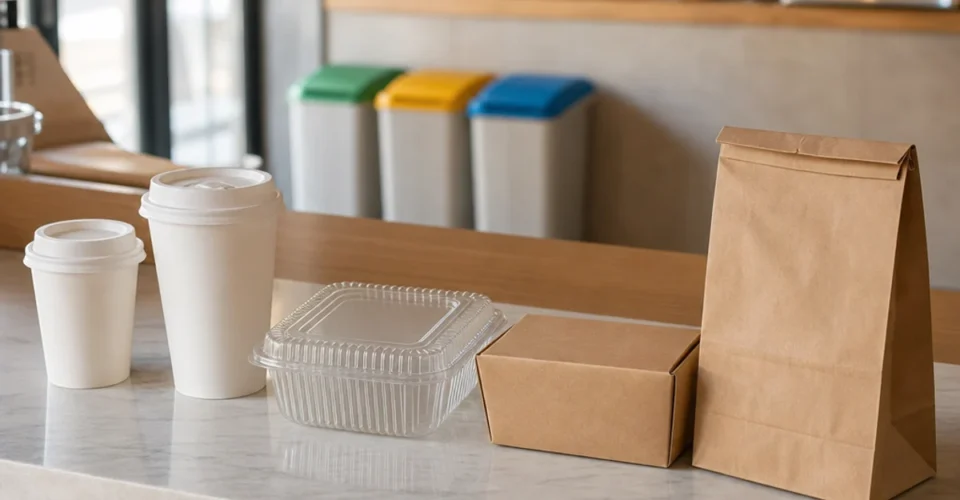
- List every packaging item you sell or use in the EU – cups, containers, boxes, bags and outer cartons.
- Record the exact material of each item, such as PP number 5, paperboard with PE lining or kraft paper.
- Ask suppliers for written material specifications, so you can map each item to the future sorting label.
- Leave space on printed artwork for a sorting label, instead of filling every panel with design.
- Watch the Commission’s consultation and join it through your trade association if you can.
- Plan artwork changes for 2027 and avoid ordering very large printed stocks that you may need to relabel.
What This Means for Packaging Imported from Outside the EU
The PPWR applies to packaging placed on the EU market, wherever it is made. Therefore, importers need suppliers who can describe materials accurately and print to EU artwork once the PPWR labeling rules apply.
When you source from India or elsewhere, agree in writing who prepares the label artwork, keep material data for each item, and avoid broad environmental claims on packs. Simple, accurate descriptions are the safest approach while the final PPWR labeling rules are written.
Products Mentioned in This Guide
Frequently Asked Questions
When will the PPWR labeling rules be adopted?
The European Commission now expects to adopt the labeling implementing act in the second quarter of 2027, after a public consultation. It was originally due on 12 August 2026.
Does the PPWR labeling delay change other PPWR deadlines?
No. The delay concerns the harmonized labeling implementing act. Other PPWR obligations follow the regulation’s own timetable, so the delay should not be read as a relaxation of the PPWR.
Should I change my packaging artwork now?
Most experts advise preparing, not redesigning. Map the materials of each item and leave space for a sorting label, but wait for the final specifications before printing new artwork.
Do the PPWR labels apply to imported packaging?
Yes. The regulation applies to packaging placed on the EU market, so packaging made in India or elsewhere will need the EU labels once the rules apply.
Packaging for the EU Market
Tell us which cups, containers, boxes or bags you sell in Europe. We will share written material details for each item and plan printed artwork with you, so your packaging is ready when the PPWR labels apply.